
If you have federal student loans, you may be eligible to consolidate (combine) your loans into a new Direct Consolidation Loan. You may want to consolidate your loans to make your loans eligible for certain loan repayment plans or forgiveness programs. You may also want to consolidate your loans to get out of default.
Consolidation is similar to refinancing a loan. In both cases, you are taking out a new loan that pays off your existing loans. But consolidation is less risky because the new loan is still a federal loan with federal student loan benefits. Refinancing, in contrast, pays off your existing loans with a new private loan, and that new private loan will not have access to the same benefits.
Direct Consolidation Loans are now the only type of federal student consolidation loan offered (although some borrowers still have older FFEL Consolidation Loans). Interest rates for consolidation loans are fixed and set based on the interest rates of the loans you consolidate.
Be careful about consolidating now!
Because of a new law and recent changes, consolidation can have some significant downsides, so you should carefully weigh the pros and cons before consolidating. If you have a consolidation loan issued on or after July 1, 2026, that loan and any other Direct Loans you may owe will only be eligible for the new RAP plan and the new Tiered Standard Plan. That means you will lose access to existing repayment plans that may offer lower payments. In addition, you may risk losing time you have previously earned toward IDR cancellation. That could mean that you have to spend more years in repayment before you’re eligible for IDR cancellation after consolidating. More information about the pros and cons of consolidating is below.
If you have a Parent PLUS loan, you should also carefully consider whether to include it when you consolidate. If a consolidation loan containing a Parent PLUS loan is issued after July 1, 2026, it will not be eligible for any income-driven repayment plan. In addition, the consolidation loan will only be eligible for the new Tiered Standard Plan. Even if you do not consolidate your Parent PLUS loan, consolidating other loans after July 1, 2026 will mean that you will have to repay your Parent PLUS loans on the Tiered Standard Plan, though your other loans will be eligible for the RAP plan. See our page on repayment plans for more information on different plans.
Perkins loans, an older type of loan issued before 2018, are not eligible for an income-driven repayment plan unless they are consolidated into a Direct Loan. If you only have Perkins loans, consolidation may be a good option for you, although if the consolidation loan is disbursed after July 1, 2026, it will only be eligible for RAP and the new Tiered Standard Plan. If you have Perkins loans and Direct Loans and you consolidate the Perkins loans after July 1, 2026, both the consolidation loan and your other Direct Loans will only be eligible for the RAP plan or the new Tiered Standard Plan moving forward.
Am I eligible to consolidate my loans?
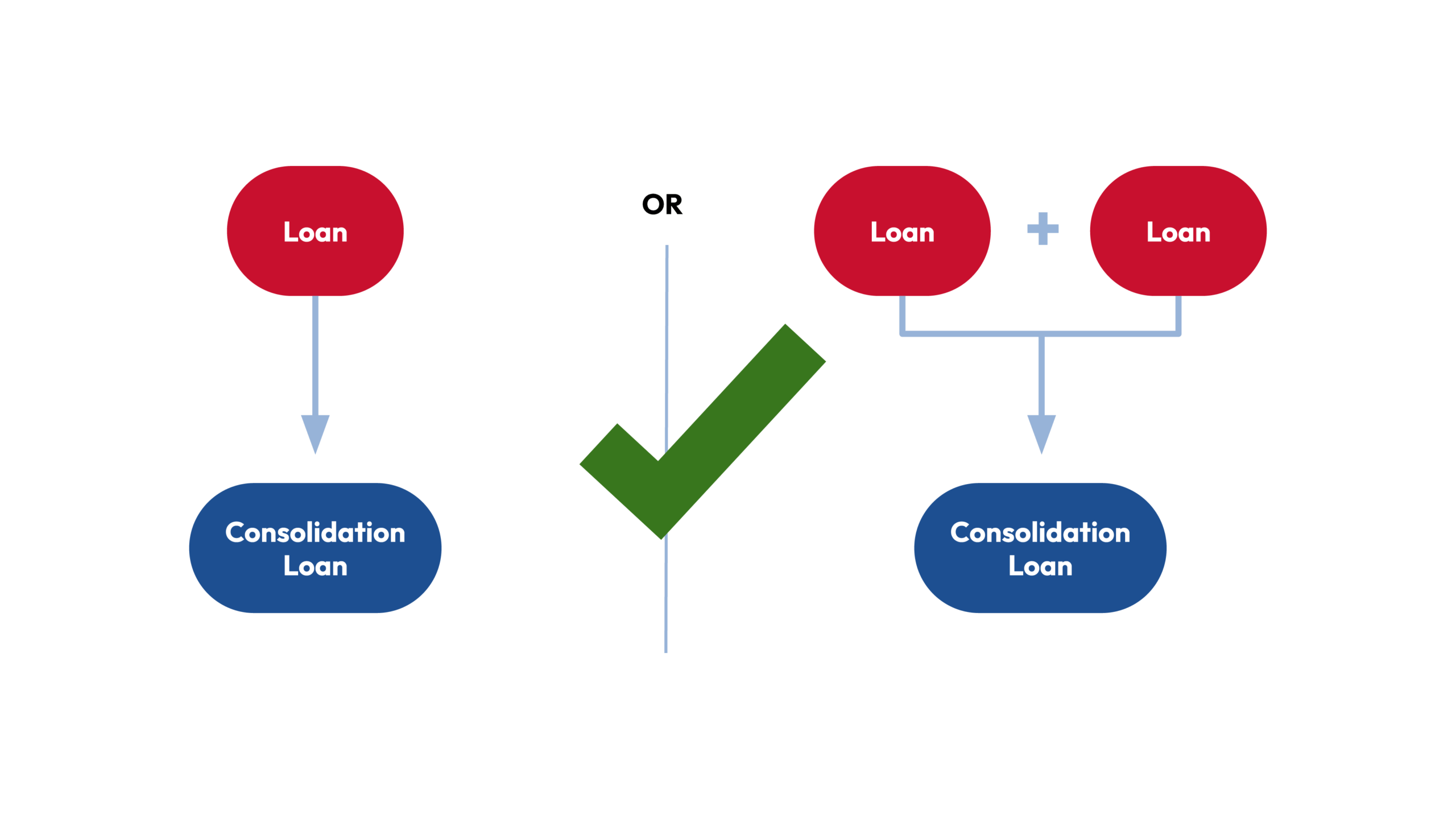
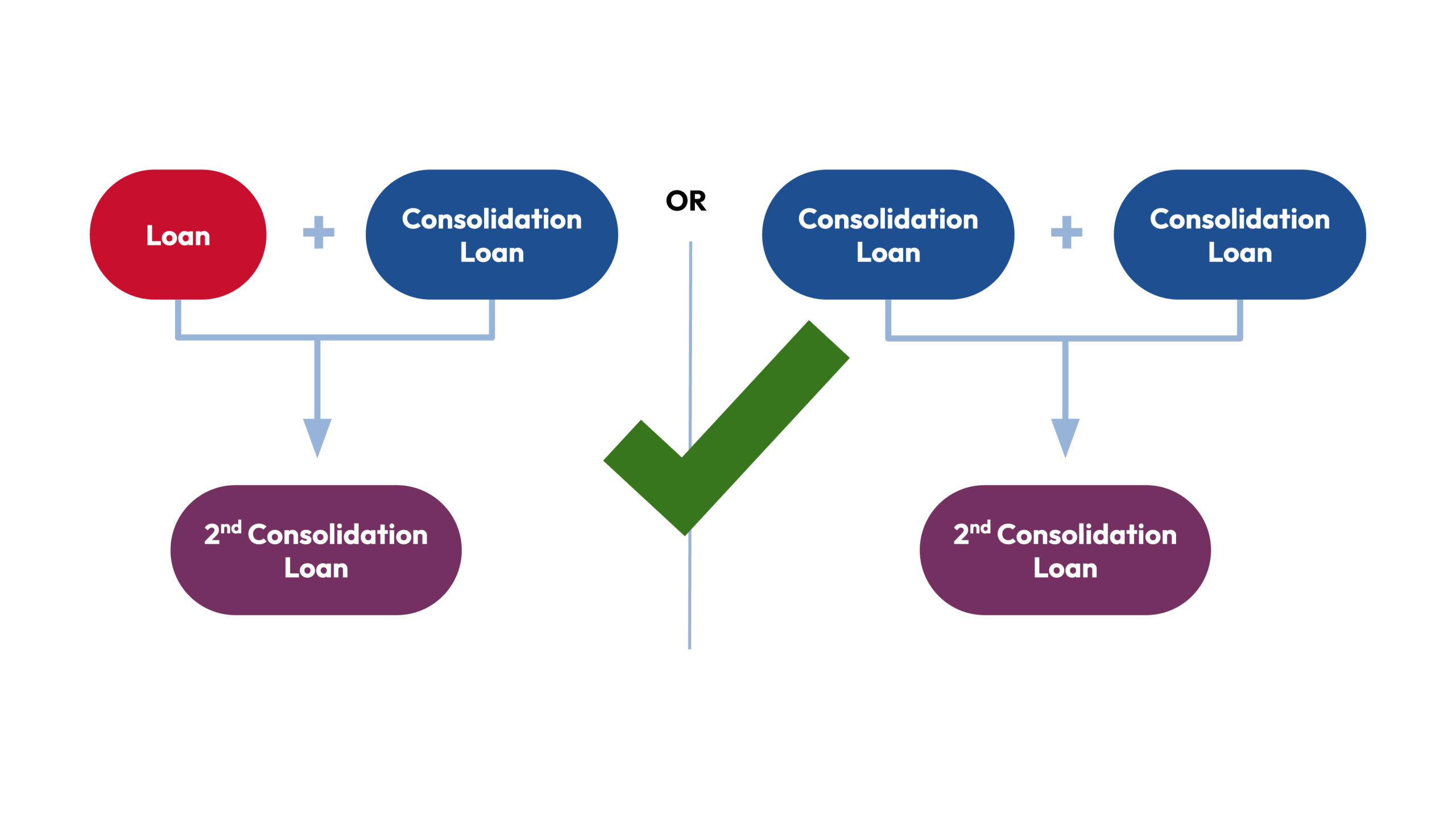
Most borrowers are eligible to consolidate their loans. Under the Direct Loan Consolidation Program, you can consolidate just about any type of federal student loan into a new Direct Consolidation Loan. You can consolidate all, just some, or even just one of your federal student loans. You can even re-consolidate a consolidation loan if you have other loans to consolidate it with. But you cannot consolidate private student loans into a federal Direct Consolidation Loan.
For example:
There are a few instances where borrowers are not eligible to consolidate their loans:
- You cannot re-consolidate a Direct Consolidation Loan on its own, unless you have another loan to consolidate it with (however, a borrower may re-consolidate a single FFEL consolidation loan to get it out of default or if the borrower indicates they intend to apply for Public Service Loan Forgiveness, and in a few other circumstances).
- If you have been sued to collect on your student debt and are subject to a judgment, you will not be able to consolidate your loans out of default unless the judgment is vacated, which a lawyer can help with.
- Borrowers whose loans are in default and are currently being collected through wage garnishment cannot consolidate until the garnishment order is lifted.
Does it cost money to consolidate?
There is no fee to consolidate your loans. Beware of any company that offers to help you with consolidation for a fee, as this may be a scam. You can apply to consolidate your loans for free by completing the Direct Consolidation Loan application on the Department of Education’s website. You can learn more about how to apply to consolidate your loans here.
You should carefully consider the pros and cons before consolidating. Once you consolidate, you cannot undo the consolidation—so make sure it is the right step for you.
Important: Only consolidate your loans using the federal Direct Consolidation Loan program. Consolidating or refinancing your federal student loans using a private loan refinancing or consolidation program will cause you to lose your federal student loan protections and benefits.
Note: If you previously consolidated your loans with your spouse into a Joint Consolidation Loan, you may be able to undo the joint consolidation loan. The Department of Education is still working on the process for borrowers to separate their Joint Spousal Consolidation Loans. Get more information and updates on the process on the Department of Education’s website.
Pros of Consolidating
- Borrowers with Perkins Loans or FFEL loans can consolidate into a Direct Loan that is eligible for the new IDR plan, RAP, and for Public Service Loan Forgiveness (PSLF) (unless their consolidation loan repays a Parent PLUS loan)
- Consolidating defaulted loans removes them from default (see more about consolidating out of default here)
- Borrowers that find their IDR payment is unaffordable or unavailable may look at what their payment would be in the Tiered Standard Plan. Consolidating will provide a new repayment term in the Tiered Standard Plan, which could provide a longer time to pay off loans and lower monthly payments. Borrowers with Parent PLUS loans that aren’t eligible for an IDR plan could consider this option to make their payments more affordable
Cons of Consolidating
- Potentially longer repayment period
- You may pay more interest over time
- If your consolidation loan is issued after July 1, 2026, you will lose access to the existing IDR plans, like IBR, PAYE, and ICR, that allow low-income borrowers to have $0 monthly payments. Your new loan and all of your Direct Loans will only be eligible for the new Tiered Standard Plan and potentially the RAP plan (Direct Loans are eligible for RAP, except Parent PLUS loans and consolidation loans that repaid Parent PLUS loan)
- You might lose certain benefits and options, including the option to use consolidation to get out of default in the future
- Consolidating loans now is likely to result in losing any time you have earned on those loans towards IDR cancellation, meaning you may have to pay your loans for more years before you’ll be eligible for IDR cancellation
- Consolidating loans with different repayment histories may impact when you’ll be eligible for PSLF
