
Can I have my federal student loans forgiven or canceled if I work in a public service job?
Yes, some or all of your remaining federal student loans may be canceled after ten years of working in public service while making required loan payments if you are eligible for the Public Service Loan Forgiveness Program (PSLF). After you meet all of the requirements, you can apply to have your remaining loan balances forgiven.
To qualify for PSLF, you must:
- have Direct Loans,
- work full-time in a qualifying public service job,
- be in a qualifying repayment plan, and
- make 120 monthly payments (10 years).
Learn More Below:
Use the PSLF Help Tool
Start earning credit toward PSLF now. Use the Department of Education’s PSLF Help Tool to check to see if your employer qualifies, to certify your employment each year, and to apply for forgiveness once you’ve made all 120 payments.

PSLF Requirements
1. Direct Loans
Direct Loans are the only types of loans that qualify for PSLF. If you have federal student loans that are not Direct Loans (for example, if you have Perkins Loans or FFEL loans), you may be able to consolidate those loans into a new Direct Consolidation Loan in order to start earning credit toward PSLF on those loans. See our page on consolidation for more information.
2. Qualifying Employment
To qualify for PSLF, you must work full-time (at least 30 hours per week) for a public service employer. The following types of employers generally qualify for PSLF:
- All government organizations (including U.S. federal, state, local, tribal governments, and military),
- All 501(c)(3) not-for-profit organizations,
- Some not-for-profit organizations with tax statuses other than 501(c)(3),
- AmeriCorps and Peace Corps.
Some examples of qualifying jobs include:
- A teacher at a public school,
- A firefighter,
- A military member,
- A social worker for a non-profit,
- A secretary for a government office,
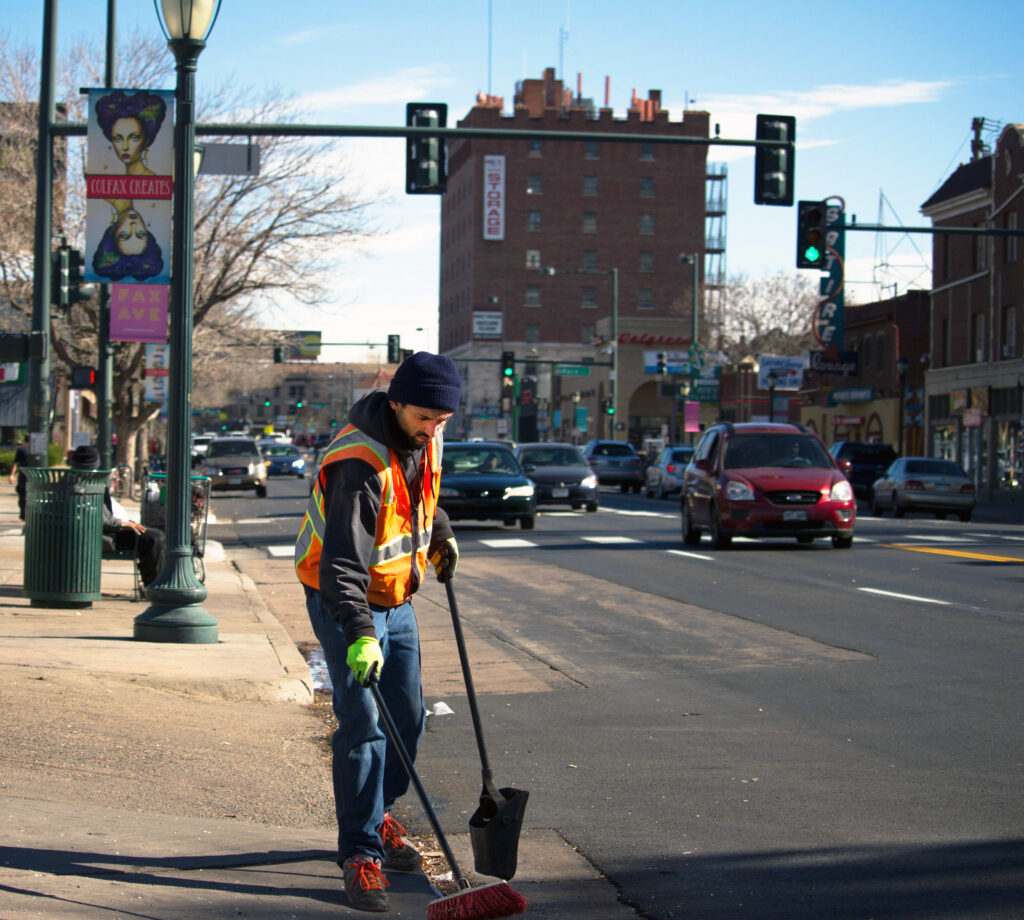
- A sanitation worker for a county department, etc.
Labor unions, partisan political organizations, and for-profit organizations, including for-profit government contractors, are not qualifying employers for PSLF.
Coming changes to PSLF qualifying employers? In fall 2025, the Department of Education issued new PSLF rules that would allow the Department to disqualify government and nonprofit employers from the PSLF program if the Department finds that the employer has engaged in activities with a “substantial illegal purpose” related to anti-discrimination law, immigration law, laws restricting gender-affirming care for minors, or certain state laws relating to unlawful protest activities. The rule would not allow the government to take away credit borrowers have already earned towards PSLF while working for the employer, but would prevent borrowers from continuing to earn credit toward PSLF while working for the employer after the employer is disqualified. The new rule is scheduled to go into effect on July 1, 2026, but it has already been challenged as unlawful in several different court cases. We will update this page when more is known about whether the new rule will go into effect.
3. Qualifying Repayment Plan
Time making the required monthly payments in the 10-year Standard repayment plan or in an Income-Driven Repayment (IDR) plan counts towards PSLF forgiveness. All IDR plans are qualifying plans for PLSF, including the IBR, PAYE, ICR, and forthcoming RAP plans. Additionally, time making payments in the SAVE plan is qualifying time for PSLF, but time in the SAVE forbearance does not count toward PSLF.
If you were repaying under a different plan, that time may count as long as the payment is equal to or greater than the payment under the Standard Repayment amount. Some types of forbearances and deferments may also count towards forgiveness. You may also be able to “buy back” months that you were in a non-qualifying forbearance or deferment by requesting to pay now what you would have owed then in a qualifying plan.
All time during the COVID-19 payment pause counts toward PSLF, so long as you meet the other PSLF requirements (e.g., you have Direct Loans and worked full-time for a government or qualifying non-profit employer).
Under the Department’s one-time IDR account adjustment that ended in 2024, and the time-limited PSLF waiver that ended in 2022, previous time in other payment plans may now count toward PSLF (see below for more information on those programs).
4. 10 years of payments
Before you can apply for PSLF, you need to make 120 months (10 years) of qualifying payments on your eligible Direct loans while working in a qualifying public service job. Only payments made after October 1, 2007 count toward PSLF. Your 120 payments do not need to be made back-to-back: If you leave your public service job temporarily and then go back to public service work later, you can still get credit for all of your payments made while working in public service.

Apply for PSLF
Although not required, it is a good idea to submit your PSLF employment certification form (ECF) each year while you are working in public service, and whenever you change public service jobs. While you can wait to submit your EFC form later, waiting will make it harder to get your employers’ signatures and harder to track your PSLF progress.
You can use the Department of Education’s PSLF Tool to easily fill out and send your ECF for your employer to sign. You can also mail or upload the signed ECF to studentaid.gov after logging into your account portal.
Track your PSLF progress: After you have submitted your ECF, you can log in to StudentAid.gov and go to My Aid in your Dashboard to see your PSLF progress. The number of PSLF qualifying payments you have made will be updated when you submit another PSLF form that documents a new period of qualifying employment
Once you have made 120 qualifying payments, you can then use the PSLF Help Tool to apply online to have your remaining balance on your loans forgiven. It may take a few months for your application to be processed. If it is approved, you can get a refund of any additional payments you made on your loans after you have reached 120 months of qualifying payments. If your PSLF application is denied, you can contact your loan servicer, submit a reconsideration request, or file a complaint with the FSA Ombudsman to see if it can be fixed.

One-time Adjustments to Help Borrowers Qualify for PSLF
After the PSLF program was created in 2007, numerous problems with the program led to only a small percentage of borrowers in public service actually receiving loan forgiveness after 10 years. To fix these problems, the Department of Education ran two temporary programs – the PSLF Waiver (which ended in 2022) and the one-time payment count adjustment (which ended in 2024) – that allowed many borrowers to receive credit toward PSLF for time that did not previously count due to their loan types, payment plans, or payment statuses. Since these fixes, over a million people have had their student loans forgiven through PSLF.
Because these fixes resulted in more time being considered in “qualifying repayment” than might otherwise be the case, borrowers should consider submitting ECFs to cover all of their time that they have worked full-time for public service employers – even if they aren’t sure whether they were making qualifying payments during some of the times. There is no harm in certifying your employment for all the time you worked full-time in public service since taking out your loans.
It’s important to know that these temporary programs only changed what past time (time between 2007 and 2024) qualified for PSLF. The programs helped many people get closer to loan forgiveness in the PSLF program, but borrowers who haven’t yet reached 120 qualifying payments in PSLF will still need to meet the 4 program requirements listed above going forward to continue making progress toward loan forgiveness.
For more information on how these programs impacted public service workers, see our blog post on the one-time account adjustment.
I am still having problems with PSLF. What can I do?
If you think you are not receiving credit toward PSLF that should be counted, you should first try to contact your loan servicer to see if it can be resolved. You can also contact the Department’s PSLF helpline at 1-888-303-7818. If you are having problems with your loan servicer or dealing with other issues with PSLF, such as having problems getting your employer to sign the ECF, you can file a complaint with the FSA Ombudsman.
